Matthew 18:21 KJVS
Then came Peter to him, and said, Lord, how oft shall my brother sin against me, and I forgive him? till seven times?
Luke 23:34 KJVS
Then said Jesus, Father, forgive them; for they know not what they do. And they parted his raiment, and cast lots.
Acts 7:60 KJVS
And he kneeled down, and cried with a loud voice, Lord, lay not this sin to their charge. And when he had said this, he fell asleep.
This study examines the biblical progression of forgiveness through three distinct figures, each representing a specific stage of spiritual development and understanding regarding the releases of debt.
The Mathematical Problem of Mercy
It began with a question from Peter. “Lord, how oft shall my brother sin against me, and I forgive him? till seven times?“
In Peter’s mind, seven was generous. The rabbinical tradition of the day suggested three times was sufficient. Peter was doubling the requirement and adding one for good measure. He was looking for a limit—a point where he could finally say, “Enough is enough.“
But Christ’s response shattered the ledger: “I say not unto thee, Until seven times: but, Until seventy times seven“

Christ wasn’t giving Peter a new number to track (490); He was abolishing the calculator altogether. To illustrate, He told the parable of the unmerciful servant. A man owed then thousand talents—an astronomical, unpayable debt (representing our sin against God). He was forgiven entirely. Yet, he immediately found a fellow servant who owed him a mere hundred pence and choked him, demanding payment.
We often “choke” our progress by holding onto micro-grudges—against difficult people, harsh critics, or even ourselves. When we quantify our mercy, we limit our capacity to receive the “limitless” flow of grace necessary for true service and peace.
1. Human Limit vs. Divine Infinity
Matthew 18:21-22 KJVS
Then came Peter to him, and said, Lord, how oft shall my brother sin against me, and I forgive him? till seven times? [22] Jesus saith unto him, I say not unto thee, Until seven times: but, Until seventy times seven.
Peter’s query was an attempt to find the “breaking point” of grace, He was thinkin gin terms of a ledger—a finite amount of patience that eventually runs dry.
- The Calculated Offer: Peter suggests “seven times,” which was more than double the rabbinical requirement of three. He likely felt quite magnanimous.
- The Boundless Response: Christ’s “seventy times seven” (490) is a symbolic number representing a quality of heart rather than a quantity of acts. It implies that by the time you reach the 490th time, you have lost count and developed a lifestyle of forgiveness.
- The Shift: Forgiveness must move from a transaction (I give this because you deserve it) to a disposition (I give this because it is who I am).
Peter seeks a definitive numerical limit where his obligation to forgive ends and his right to resentment begins. Peter’s counting is an attempt to maintain control. If mercy is finite, the offended party retains the power to eventually demand justice or retribution. Christ’s response is designed to break the counting mechanism entirely. It shifts the focus from the act of counting offenses to the state of being a person who no longer keeps a ledger.
2. The Bankruptcy of the Human Condition
Matthew 18:23-25 KJVS
Therefore is the kingdom of heaven likened unto a certain king, which would take account of his servants. [24] And when he had begun to reckon, one was brought unto him, which owed him ten thousand talents. [25] But forasmuch as he had not to pay, his lord commanded him to be sold, and his wife, and children, and all that he had, and payment to be made.

To explain the “why” behind the numbers. Jesus introduces a King and a servant with a debt of then thousand talents.
- The Unpayable Sum: Ten thousand talents was an astronomical amount—roughly the equivalent of several billion dollars today. It represents our sin against God; a debt so massive that even a lifetime of “good works” cannot make a dent in it.
- The Justice Clause: The law demanded payment, and because the servant had nothing to pay. he and his family were to be sold. This highlights that mercy is not “overlooking” a debt, but acknowledging that the debtor is completely bankrupt.
The spiritual condition of humanity is one of total insolvency, as the magnitude of human sin created a debt that could not be settled through any earthly resource. This profound deficit required a divine intervention, leading God to send His only begotten Son to achieve a complete redemption. The sacrificial death of Christ provided the necessary legal and spiritual satisfaction to address this transgression. Consequently, God is now prepared to grant full forgiveness because the merit of Christ’s sacrifice is sufficient to fully encompass and cancel every sin.
3. The Absurdity of the Micro-Grudge
Matthew 18:26-30 KJVS
The servant therefore fell down, and worshipped him, saying, Lord, have patience with me, and I will pay thee all. [27] Then the lord of that servant was moved with compassion, and loosed him, and forgave him the debt. [28] But the same servant went out, and found one of his fellowservants, which owed him an hundred pence: and he laid hands on him, and took him by the throat, saying, Pay me that thou owest. [29] And his fellowservant fell down at his feet, and besought him, saying, Have patience with me, and I will pay thee all. [30] And he would not: but went and cast him into prison, till he should pay the debt.

The heart of the “Mathematical Problem” is the comparison between the debt we are forgiven and the debt we refuse to forgive others.
- The Billion vs. The Penny: After being forgiven a billion-dollar debt, the servant finds a peer who owes him “an hundred pence” (about three months’ wages).
- The Chokehold: The servant “laid his hands on him, and took him by the throat.” This is a graphic picture of how we treat others when we forget our own forgiven state. We focus on the “pennies” others owe us while standing in the light of the “billions” we no longer owe.
- The Irony: The second servant used the exact same plea as the first: “Have patience with me, and I will pay thee all.” Yet the one who had just received patience refused to grant it.
The divine act of forgiveness is not a mere verbal declaration, but a profound recognition that Jesus Christ took upon Himself the nature and penalty of sin. While humanity views the crucifixion as the ultimate manifestation of grace and mercy, the experience of God the Father involved witnessing the concentration of human hatred, bitterness. and every form of transgression placed upon His Son. When considering the nature of forgiveness, it is essential to contemplate the Father’s position and the actual necessity of Christ’s sacrificial death as the only means to address the severity of human sin.
4. The Spiritual Backlash of Retention
Matthew 18:31-35 KJVS
So when his fellowservants saw what was done, they were very sorry, and came and told unto their lord all that was done. [32] Then his lord, after that he had called him, said unto him, O thou wicked servant, I forgave thee all that debt, because thou desiredst me: [33] Shouldest not thou also have had compassion on thy fellowservant, even as I had pity on thee? [34] And his lord was wroth, and delivered him to the tormentors, till he should pay all that was due unto him. [35] So likewise shall my heavenly Father do also unto you, if ye from your hearts forgive not every one his brother their trespasses.

Forgiveness is the only spiritual resource that “spoils” if it is not shared. It must pass through us to remain with us.
- The Deliverance to Tormentors: The King was wroth and delivered the unmerciful servant to the tormentors. This suggests that when we hold onto unforgiveness, we are the ones who end up in the prison of bitterness and spiritual “torment.”
- The Practical Warning: “So likewise shall my heavenly Father do also unto you, if ye from your hearts forgive not every one his brother their trespasses.”
In your personal life, unforgiveness acts as “friction” in your system. It slows down your service and creates a “deadly be” mentality (where you are focused on what you must do or what others must do for you) rather than the “grace principle” of what God has already done.
Action Insight
When you find yourself “taking someone by the throat” over a slight or a failure, pause and visualize the ten thousand talents you were unable to pay. the math of the Kingdom dictates that you cannot truly appreciate the King’s mercy while holding a fellow servant’s “hundred pence” against them.
Hebrews 8:12-13 KJVS
For I will be merciful to their unrighteousness, and their sins and their iniquities will I remember no more. [13] In that he saith, A new covenant, he hath made the first old. Now that which decayeth and waxeth old is ready to vanish away.
The divine act of forgiveness is an enduring and permanent reality rather than a solitary event. Under the provisions of the New Covenant, the assurance is given that human transgressions are perpetually dismissed from God’s memory.
The Source of the Pattern
Luke 23:34 KJVS
Then said Jesus, Father, forgive them; for they know not what they do. And they parted his raiment, and cast lots.
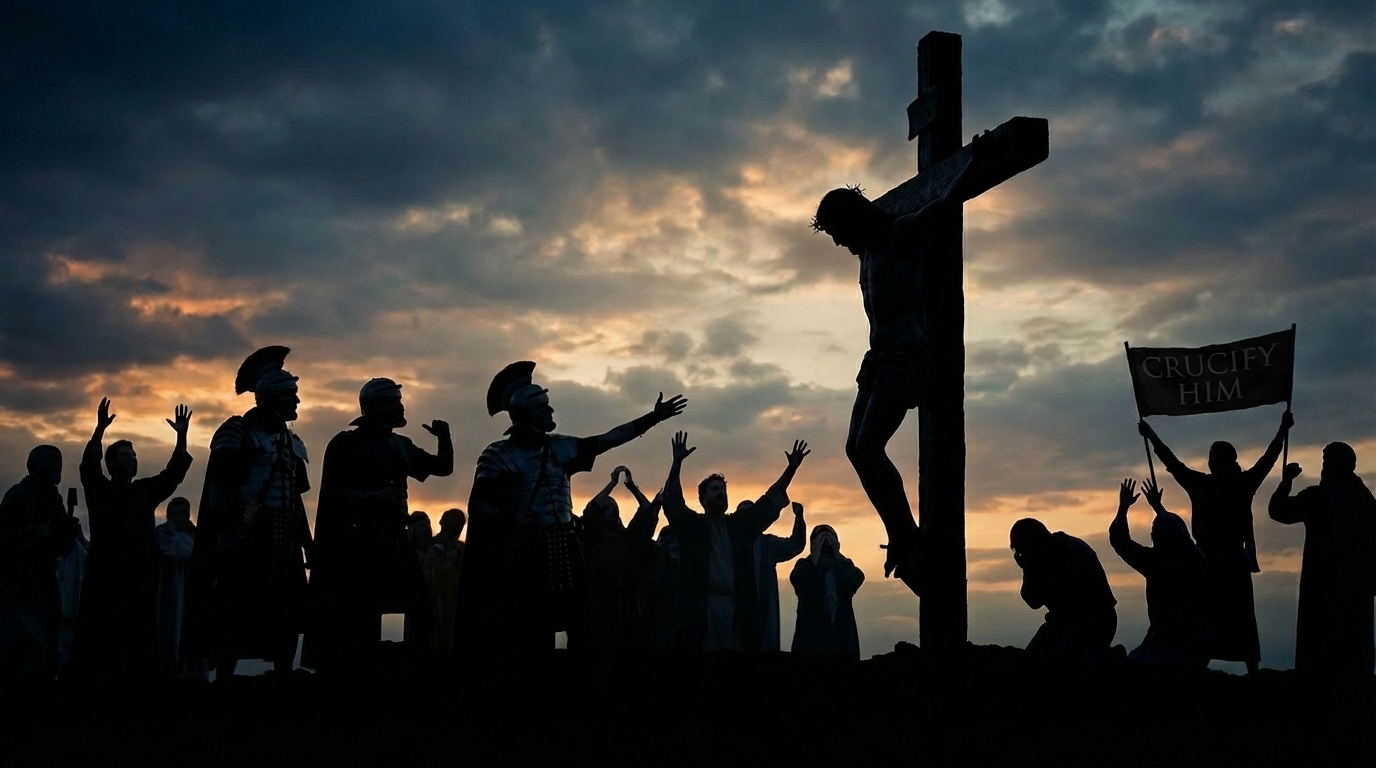
The sky over Golgotha didn’t just turn dark; it turned heavy. Imagine the scene through the eyes of the Roman centurion. You’ve spent your morning hammering iron through bone. You are the “implementer,” the one dong the dirty work of a system that thrives on suppression. You expect curses. You expect the rhythmic, desperate spat of insults that usually accompanies a dying man’s final gasps.
But then, the Man on the center cross draws a ragged breath—not to curse the hands that hurt Him, but to advocate for them.
Stephen’s ability to forgive didn’t come from his own willpower; it was a direct imitation of his Master. As the nails pierced the flesh of the Son of God, the first word from the Cross was not a cry of agony, but a plea for the ignorant.”

At the Cross, we see the connection Forgiveness is not based on the apology of the offender, but on the character of the Provider. Christ forgave while the soldiers were still gambling for His clothes. He didn’t wait for a “sorry” that might never come.
1. The Timing of the Plea: Forgiveness During the Offense
The most striking element of this prayer is that it was offered while the crime was still in progress.
- Immediate Mercy: Jesus did not wait for the soldiers to finish their work, nor did He wait for the cross to be taken down. He spoke while the nails were fresh.
- No Prerequisites: There was no apology offered by the executioners, no remorse shown by the mockers, and no change in the “historical situation” of the moment.
- The Pattern: We are taught that forgiveness is not a response to the offender’s change of heart, but a decision made by the victim’s heart.
The biggest trap in forgiveness is waiting for the offender to “deserve” it. Look at the context of Luke 23:34. The soldiers were literally divided His garments among them while He was still alive. They weren’t sorry. The weren’t asking for mercy. They were actively causing pain.
Jesus didn’t wait for a change in their behavior to release the debt. He understood a secret: Forgiveness is about the forgiver.
2. The Basis of the Plea: The Blindness of Sin

Jesus prays, “Father, forgive them; for they know not what they do.”
- The Ignorance Clause: This does not mean the soldiers were literally unaware they were killing a man; it means they were spiritually blind to the eternal significance of the Person they were piercing.
- Separating the Sinner from the Sin: Christ looks past the physical violence to see the spiritual poverty driving it. He identifies their “fallen condition” and uses it a ground for intercession.
- The pattern: When we view our offenders through the lens of their spiritual brokenness rather than just their outward actions, mercy becomes a “natural unfolding” of grace.
We often treat forgiveness like a moral “nice-to-have”—a spiritual merit badge we wear when we’re feeling particularly holy. But in this moment, Jesus reveals that forgiveness is a sovereign power move.
3. The Object of the Plea: Intercession Over Self-Preservation
At the moment where human nature screams for self-defense or vengeance, Christ uses His remaining breath for the benefit of his enemies.
- Substitutionary Posture: As the Mediator, He stands between the wrath of God and the men who are actively murdering Him.
- The Shift in Focus: He is not asking the Father to “relieve My pain” or “destroy My enemies,” but to “forgive them.”
- The Pattern: True forgiveness is essentially a form of prayer. It is asking God to not “lay this sin to their charge,” effectively releasing them from the debt they owe you and transferring the case to the Heavenly Court.
When we compare the forgiveness extended by Christ to the forgiveness we are called to give others, we see a shift from a “transactional” mindset to a “transformational” one. In the Bible, the standard for our behavior is notr found in what we feel is fair, but in the pattern set by the cross.
Christ’s Forgiveness vs. Ours
Here is a comparison of Christ’s forgiveness versus our human tendencies, and how we can bridge that gap.
The Timing: Proactive vs. Reactive –
Human forgiveness is often reactive, we wait for an apology, a change in behavior, or a sign of remorse before we “grant” our pardon. We treat forgiveness like a reward for good behavior. In contrast, Christ’s forgiveness is proactive.
While hanging on the cross—while the soldiers were actively “parting His garments” and mocking His agony—Jesus said, “Father, forgive them; for they know not what they do.” He didn’t wait for them to repent; He released the debt while the offense was still in progress.
The Scope: Remission vs. Retention –
Colossians 1:14 KJVS
In whom we have redemption through his blood, even the forgiveness of sins:
Isaiah 43:25 KJVS
I, even I, am he that blotteth out thy transgressions for mine own sake, and will not remember thy sins.
Our natural tendency is to retain the memory of the wrong as leverage. We might say, “I forgive you,” but we keep the “copper nails” of the offense in a mental ledger, ready to be used during the next argument. This is the “Forgiveness Trap“—Staying shackled to the past under the guise of peace.
Christ’s forgiveness is described as remission. In Colossians 1:14, we see the redemption is found in the “forgiveness of sins.” When God forgives, he “blots out” the transgression (Isaiah 43:25). He chooses to no longer use that debt as a barrier to the relationship.
The Power Dynamic: Surrender vs. Leverage –
Ephesians 4:32 KJVS
And be ye kind one to another, tenderhearted, forgiving one another, even as God for Christ’s sake hath forgiven you.
We often view letting go as a sign of weakness of “giving up.” We feel that by holding a grudge, we maintain some form of power over the person who hurt us.
In the Biblical record, forgiveness is the ultimate power move. By releasing the debt, you reclaim your “mental real estate.” You stop being a “worthy recipient” of bitterness. As noted in the book of Matthew, the heart is the control center; if it is occupied by revenge, it cannot be occupied by creativity or joy. Christ’s forgiveness was His greatest display of authority—the power to break the cycle of “an eye for an eye.”
The Basis: Grace vs. Merit –
Human forgiveness is usually based on merit. We ask, “Do they deserve to be let off the hook?”
Christ’s forgiveness is based on grace (unmerited favor). Ephesians 4:32 explicitly bridges this gap for us. We don’t forgive because the other person is “good”; we forgive because we have been the beneficiaries of a debt we could never pay.
The Echo in the Valley of Death
Now, look at Stephen. He is full of the Holy Ghost. He looks up steadfastly into heaven and sees the glory of God, and Jesus standing on the right hand of God.
Notice the posture: Jesus is usually described as sitting at the right hand of the Father. But for Stephen, the first martyr, the King is standing—perhaps to welcome him, perhaps as his Advocate.
Stephen’s prayer, “Lord, lay not this sin to their charge,” is the human application of the Divine standard. Stephen proves that the “seventy times seven” isn’t just a nice theory for a sermon; it is a practical reality for the valley of shadows.
1. The Echo in the Valley of Death
Acts 7:55-56 KJVS
But he, being full of the Holy Ghost, looked up stedfastly into heaven, and saw the glory of God, and Jesus standing on the right hand of God, [56] And said, Behold, I see the heavens opened, and the Son of man standing on the right hand of God.

Before Stephen could pray for his enemies, he had to look past them.
- The Vision Glory: Stephen, “being full of the Holy Ghost,” looked up steadfastly into heaven. His focus moved from the stones in the enemies’ hands to the Glory at God’s right hand.
- The Standing Christ: Typically, Scripture describes Jesus as sitting (work finished). Here, He is standing. This suggests Jesus rose in honor of His first martyr or as a Divine Advocate standing to receive His servant.
- The Pointer: Forgiveness is impossible as long as you are staring at the “stones” (the offences). You must look up to the Standing Christ to find the internal resource to release the debt.
2. The Prayer of Committal
Acts 7:59 KJVS
And they stoned Stephen, calling upon God, and saying, Lord Jesus, receive my spirit.

As the stones began to strike, Stephen’s first priority was his relationship with God, not his grievances with men.
- Calling Upon God: He said “Lord Jesus, receive my spirit.” He followed the exact pattern of Christ on the cross (“Father, into thy hands I comment my spirit”).
- Secure Identity: Stephen knew his spirit was safe in Christ’s hands. Because his eternal security was settled, he didn’t need to “save” himself through bitterness or self-defense.
- The Pointer: When you know your worth and your future are secure in Jesus, you lose the “need” for vengeance. Vengeance is a tool of the insecure; forgiveness is the luxury of the secure.
3. The Prayer of Intercession
Acts 7:59 KJVS
And they stoned Stephen, calling upon God, and saying, Lord Jesus, receive my spirit.
Stephen’s final act was a “knee-mail” of mercy.
- The Posture of Submission: He “kneeled down.” Even under a hail of rocks, he maintained a posture of worship and humility.
- The Loud Cry: He “cried with a loud voice,” ensuring his intercession was heard over the jeers of the mob.
- The Specific Plea: “Lord lay not this sin to their charge.” this is the humanized echo of Luke 23:34. Stephen wasn’t just “forgetting”; he was legally requesting a “Stay of Execution” for his murderers.
- The Pointer: Real forgiveness is specific. It names the sin (“this sin”) and then explicitly asks God to not “charge” it to the offender’s account.
4. The Result: The Transformation of Saul
Acts 7:58 KJVS
And cast him out of the city, and stoned him: and the witnesses laid down their clothes at a young man’s feet, whose name was Saul.
Acts 8:1 KJVS
And Saul was consenting unto his death. And at that time there was a great persecution against the church which was at Jerusalem; and they were all scattered abroad throughout the regions of Judaea and Samaria, except the apostles.
Acts 22:19-20 KJVS
And I said, Lord, they know that I imprisoned and beat in every synagogue them that believed on thee: [20] And when the blood of thy martyr Stephen was shed, I also was standing by, and consenting unto his death, and kept the raiment of them that slew him.
When Stephen “fell asleep,” his prayer remained active.
- The Silent Witness: Acts 7:58 and 8:1 tell us a young man named Saul was “consenting unto his death” and holding the clothes of the stone-throwers.
- The Answered Prayer: Many scholars believe the conversion of Saul (Paul) was the direct fruit of Stephen’s dying prayer. Stephen asked God not to “charge” them; God answered by “changing” the leader of the mob.
- The Pointer: You never know what “Saul” is watching your reaction to pain. Your willingness to forgive may be the very “winged arrow” God uses to pierce the heart of your most vocal critic.

In a world that operates on “an eye for an eye,” the person who can look at their detractors and say, “I release you,” is the only one who is truly free. Don’t let a past offense steal you future. Follow the Author of Life: Open your hands, release the debt, and step into your true power.
Getting Rid of the “Iron Nails”
For us Christians, “iron nails” are the small resentments we harbor. Forgiveness is not feeling; it is a legal release of a debt you were never going to be able to collect anyway. When you forgive, you don’t change the past, but you certainly change your future,
Thank you for taking the time to read this. God is faithful! God bless you.

Leave a Reply